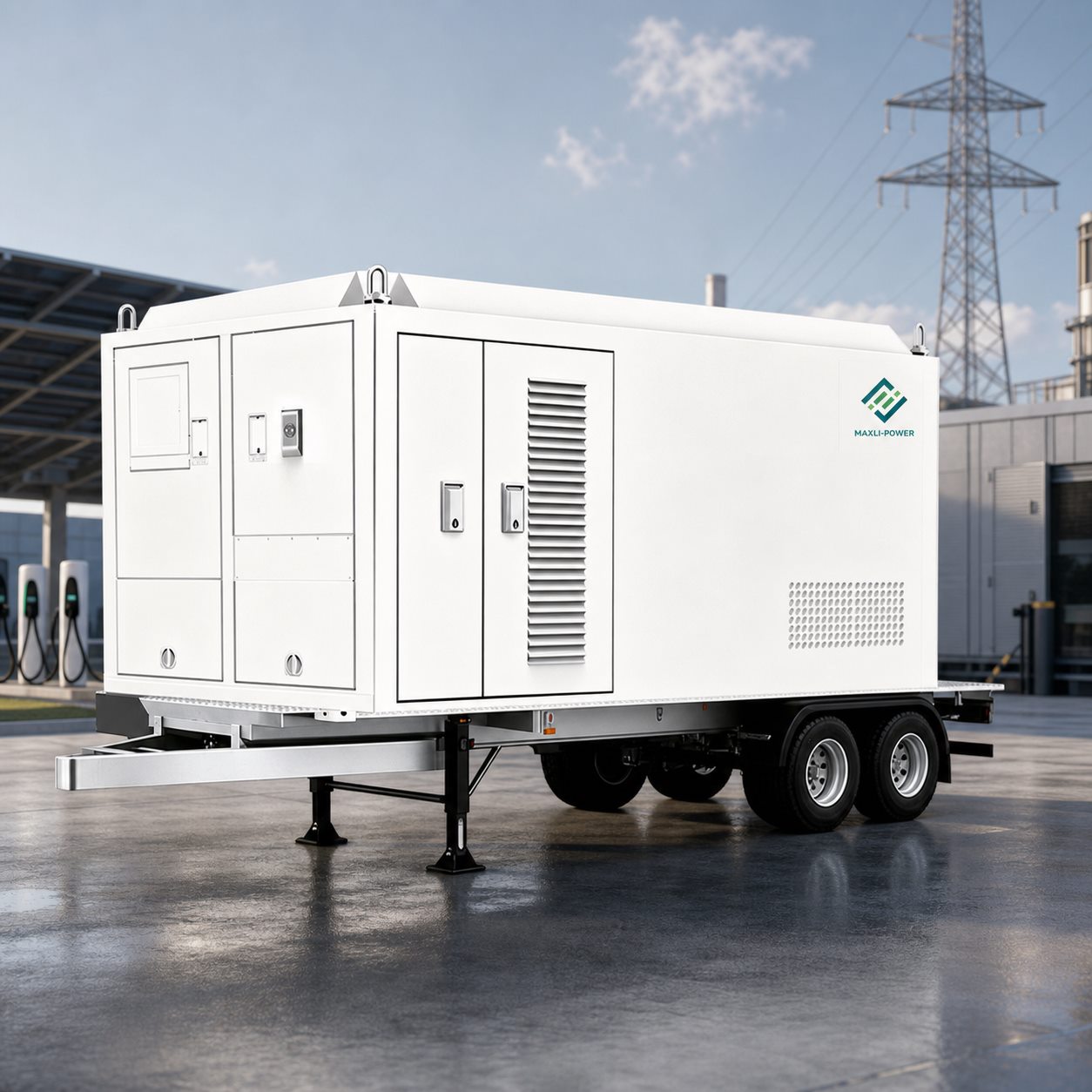
As electric vehicle adoption continues to grow, businesses and fleet operators face increasing challenges when expanding charging networks. Traditional EV charging stations often require significant investment in grid upgrades, construction work, and permanent infrastructure installation. Therefore, companies are looking for more flexible and cost-effective charging solutions. The mobile battery energy storage charging system provides an alternative approach by combining high-capacity energy storage with fast DC charging capability. Instead of relying completely on fixed charging infrastructure, businesses can deploy stored power where and when it is needed, reducing installation costs and improving operational flexibility. Moreover, Max Li-Power develops advanced mobile energy storage solutions that support commercial EV charging and industrial power applications with reliable performance.
Lower Installation Costs Through Flexible Deployment
First, one of the biggest advantages of mobile energy storage systems is the reduced need for complex electrical construction. Traditional charging stations may require new transformers, power distribution upgrades, and long approval processes before operation. In contrast, a mobile energy storage solution can be quickly transported and installed at different locations. As a result, businesses can avoid large upfront investments in permanent charging infrastructure. Furthermore, temporary locations such as construction sites, logistics hubs, and event areas can benefit from flexible power deployment without building a complete charging station.
Supporting High-Power EV Charging Without Grid Expansion
In addition, high-power charging demand can place significant pressure on existing electrical networks. Many commercial facilities do not have sufficient grid capacity to support multiple fast chargers simultaneously. The mobile battery energy storage charging system helps solve this challenge by storing energy and delivering high-power output when required. The 160kW / 261kWh model and upgraded 240kW / 270kWh / 1C version provide strong charging capability for demanding applications. Therefore, companies can achieve fast EV charging performance without immediately investing in expensive grid expansion projects.
Improving Operational Efficiency for Commercial Applications
Moreover, charging efficiency directly affects business productivity. For fleet operators, construction companies, and industrial users, vehicle downtime can create additional operational costs. With 1C charging and discharging capability, the system provides rapid energy delivery for time-sensitive operations. In addition, its high-capacity battery storage supports a continuous power supply for multiple charging requirements.
The mobile battery energy storage charging system is suitable for:
- Electric vehicle fleets
- Logistics transportation operations
- Construction projects
- Mining equipment charging
- Temporary charging stations
- Heavy machinery power support
Therefore, businesses can maintain efficient operations while reducing dependency on fixed charging facilities.
Lower Costs Through Multi-Scenario Applications
Furthermore, traditional charging infrastructure is often designed for a single location, which limits long-term flexibility. When business requirements change, companies may need additional investment to relocate or expand charging facilities. A mobile energy storage charger provides greater adaptability because it can be moved between different sites according to demand. For example, the same unit can support construction operations during one project and provide emergency charging support in another location. As a result, businesses can maximize equipment utilization and achieve better investment returns.
Reliable Performance for Industrial Environments
In addition, cost reduction does not mean sacrificing reliability. Industrial charging applications require equipment that can operate safely under challenging conditions. The system uses industrial-grade components and intelligent thermal management technology to maintain stable performance. Moreover, each unit undergoes strict FAT testing, including battery inspection, charging verification, safety checks, and operational simulation. Therefore, users can rely on consistent performance during continuous operation.
Supporting Future Electrification Projects
Finally, as industries continue transitioning toward electrification, flexible energy solutions will become increasingly important. Businesses need charging systems that can adapt to changing power demands while controlling infrastructure expenses. The mobile battery energy storage charging system offers a practical solution by combining fast deployment, high-capacity energy storage, and efficient charging performance. With advanced solutions from Max Li-Power, companies can reduce infrastructure investment, improve charging flexibility, and support modern electrification projects more efficiently.


 10Nov
10Nov
 by
by